
The words of the curator
By Dan Zhou
A latent image, when developed, causes silver atoms to form nucleation sites on the surface of silver bromide crystals within the emulsion of sensitized paper. These atomic clusters then catalyse the reduction of the exposed crystals, causing filamentary silver to rapidly aggregate into a porous, skeletal structure. After fixing, the original silver salts are dissolved, and the voids and density variations within this web of silver filaments leave behind a granular play of light and shadow—the ‘grain’. As the visually resolvable element of a silver gelatin print, the pore size, filament thickness, and spatial density of this silvery network collectively determine the image’s sharpness, from its microscopic detail to its macroscopic clarity.
In the earliest days of photography, sensitized materials were pressed directly against the negative, producing a positive print equal in size to its source. The introduction of the optical lens enabled physical enlargement, creating images far larger than contact prints and revealing previously hidden, minute details. This led photographers to desire ever-larger prints, a wish fulfilled by high-magnification enlargers.
But does enlarging the scale of detail lead to greater clarity? Does it render the content of the image more complete and “lifelike”?
Optical enlargement has its limits. When projected within the approximately 0.06 mm (60 μm) voids of the silver skeleton—a scale about one-hundredth the width of a human hair—the macroscopic image remains relatively refined. Beyond this threshold, with excessive magnification, the matrix of silver filaments grows sparse, the area of scattered light increases, and the “image” loses its sharpness. To the naked eye, it appears coarse and blurred. Enlarged too far, the structural boundaries of high-frequency information break down or are lost altogether, and the contours of objects degrade. Furthermore, legibility is tied to viewing distance. The closer one is, the more apparent the “grain” becomes; step back, and once the grain falls below the human resolution limit (around 0.06 mm), the retina and the brain’s dual mechanisms of low-pass filtering and edge completion smooth the discrete particles into continuous tones, allowing a form to emerge, nearly intact.
This physical phenomenon is precisely captured byMichelangelo Antonioni’s insight:
“… by enlarging too far, the object itself decomposes and disappears. Hence there’s a moment in which we grasp reality, but then the moment passes.”
Michelangelo Antonioni, 1966 | The Architecture of Vision, 1996, p. 113
Within the technical realm of photographic imaging, there is no proportional relationship between sharpness and the integrity or truthfulness of the image’s content.
Technology evolves with an inevitable logic, yet at an unpredictable pace. It is unfair to judge image quality while ignoring the constraints of a given era’s craft. What we can and should discuss, however, is the evolving relationship between ourselves, our imaging technologies, and the physical media that carry our pictures.
The camera’s ability to record reality allowed us to “see” events that occurred in our absence and to accept this record as “truth”. The rarity of equipment, the uncertainty of the outcome, and the sheer time investment fostered a kind of elite: those who mastered the crafts of photography and printing. The scanner broke this spell, reducing the laborious process of reproduction to a single button press and an incomparably shorter timeframe. The digital camera then dismantled the technical primacy of film. The integration of cameras into portable communication devices spurred the growth of mobile computing and cloud storage, shattering the technical, environmental, and temporal limits that once defined the life of a photographic image from creation to preservation. Digital visual information now circulates within the compatible thresholds of our devices; viewing is accomplished by the swift, light swipe of a finger across a glass screen. The paper base is no longer essential.
The fissuring of the silver filament structure under extreme physical enlargement can now be instantly “healed” and filled by the sheer volume of 120 million pixels and computational noise reduction. This capability has fostered a reverence for the right to release high-definition information—we are no longer content to merely record but now seek to generate a “flawless” reality. This eradication of all “imperfection” ultimately leads to a steadfast belief in an algorithmically guaranteed “hyperreality”. Here, the image no longer refers to the world but to a model—generated by the algorithm itself—that is more perfect than reality. This sense of “realism” obscures the severing of photography’s indexical bond to the physical world and the consequent vanishing of its material evidence—a defining quality of the silver-gelatin era. Thus, solving the new problems created by this very technology—compression artefacts, algorithmic reality—becomes the driving force behind an endless cycle of pursuit for “higher-resolution outputs and higher-definition displays”. This technological involution has itself become an alienated, dominant logic.
As of August 2025, verifiable data outlines the frontiers of this expansion:
- In Capacity: China Mobile’s “和家看护” EB-level storage engine supports single image files of up to 2.3 GB (approx. 120 megapixels, 16-bit RAW). Globally, services like Sync.com, pCloud, Icedrive, and MEGA impose no single-file-size limit on their desktop clients, theoretically supporting individual image files up to 5 TB.
- In Speed: The peak internal network upload bandwidth at Alibaba Cloud’s OSS East China 2 node has reached 20 Gbps (≈2.5 GB/s). Meanwhile, joint technical practices between Cloudflare and AWS on the global public network show that peak cross-continental transfer speeds can approach the same order of magnitude using edge nodes and multipart uploads.
In this conspiracy of accelerating information and relentless magnification, a new order has quietly emerged: the pace of technological iteration far outstrips the speed of our ethical reflection upon it; the relentless pursuit of efficiency inadvertently erodes our deeper enquiry into the meaning of images; and as all aesthetic and ethical values must be quantified as parameters, the subtle qualities that cannot be calculated are the first to vanish from our sight. A dislocation has gradually appeared between the iteration of image production technology and an ethics of “appropriate limits”.
And so we witness high-configuration devices constantly upgraded, imaging software continually pushing the “pixel-to-physical-size” threshold, and AI-generated photographic images growing more “lifelike”. The photograph is no longer a “gift” tempered by time; the Benjaminian “aura” is utterly dissolved by the verdict of resolution, transmission speed, and computing power. The ethical stakes of the image are seldom mentioned. The fundamental question of what an image is has faded from public consciousness; “being seen” is subordinate to “being clicked on”. Photography has been simplified into a barrier-free medium of instant gratification and a menu of “presets + AI”. The user no longer needs to engage their “sensory body” to understand and experience the triad of “light-matter-time”, nor must they take responsibility for “exposure accuracy”. The second-long “image delivery” merges, compresses, and replaces the shutter’s release, the negative’s exposure, development, fixing, printing, drying, and viewing—this entire, requisite sequence of waiting, this covenant forged with time itself.
What, then, remains of photography?
As technology strives to eliminate all waiting, all trace, and all uncertainty, the very essence of photography—a craft of light, matter, and time—reveals itself in the interstices abandoned by efficiency.
Here, we must confront a final enquiry: Can we answer what irreplaceable value photography holds for us, once all algorithmic “perfection” is stripped away? Can we still recover that clumsy yet sincere covenant it once had with the real world?
Perhaps, we can still choose.
To see if, within this vast system of technology, efficiency, and algorithms, there exist cracks and interstices—to find another way to make images. To redirect our gaze towards pictures born of modest scale, slow craft, and authentic grain. And to look, with measured attention, at the traces that have surfaced on paper—where time and matter once lingered.
*The views above are my own. Professional or data-related inaccuracies are welcome for correction; differing perspectives are open for discussion.
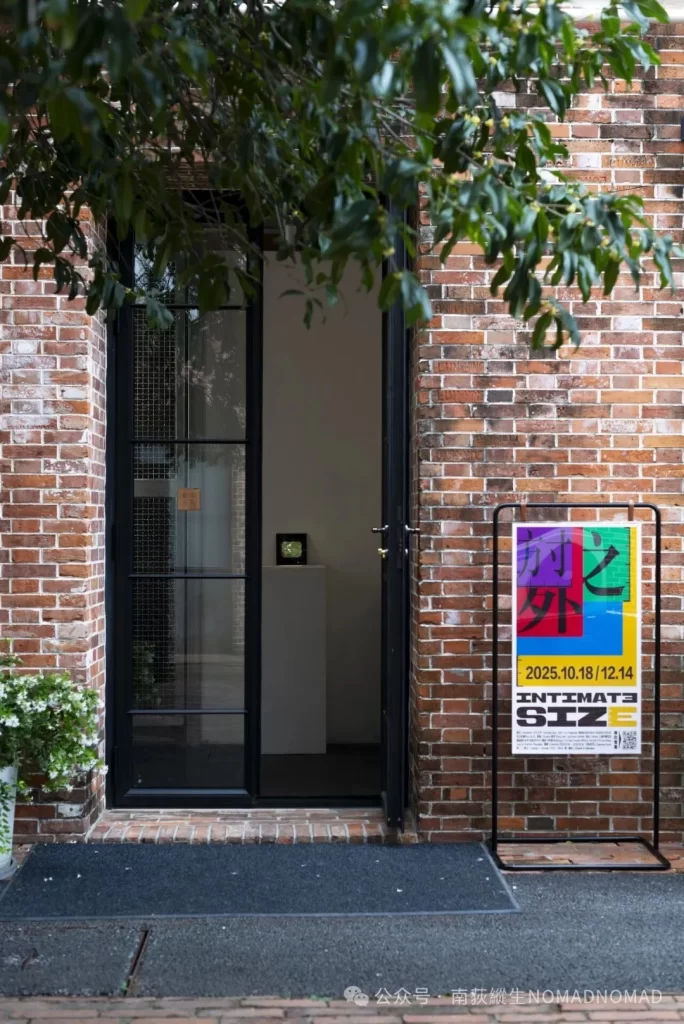
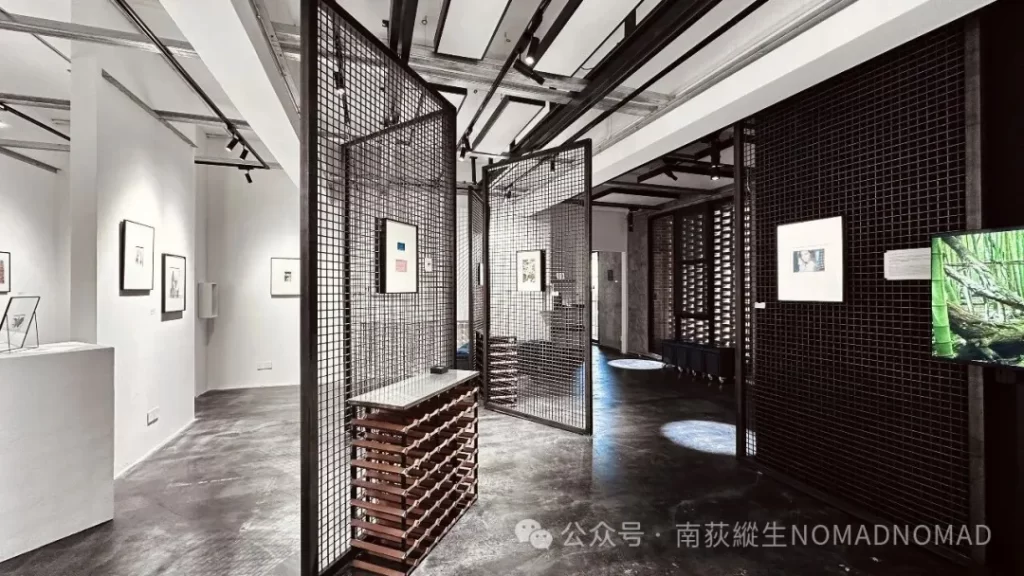
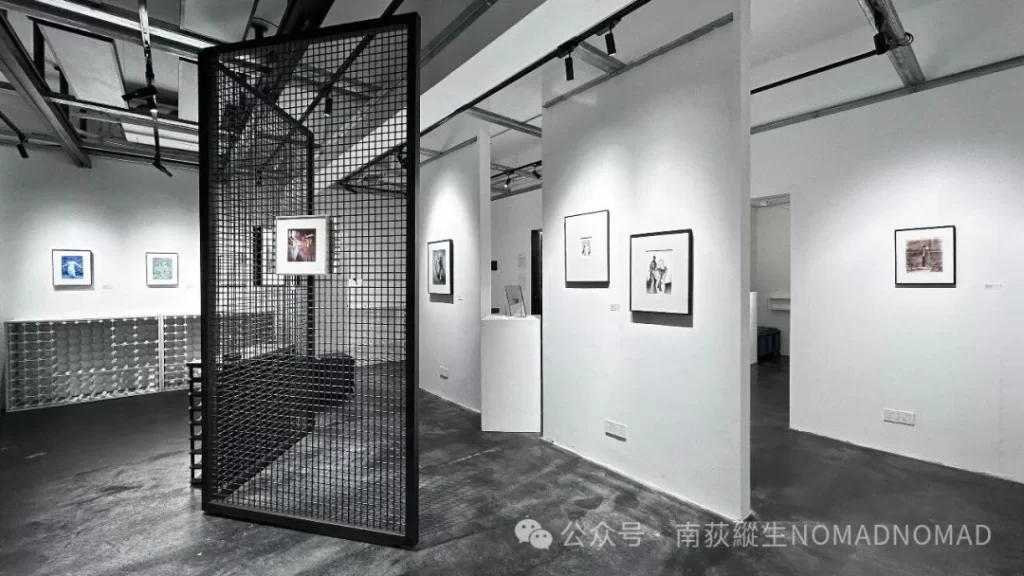
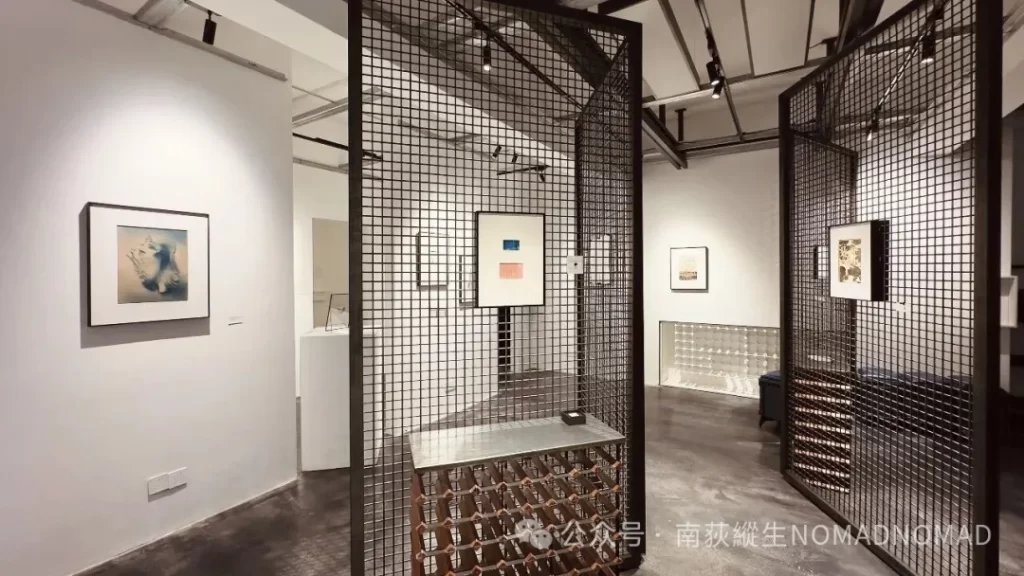
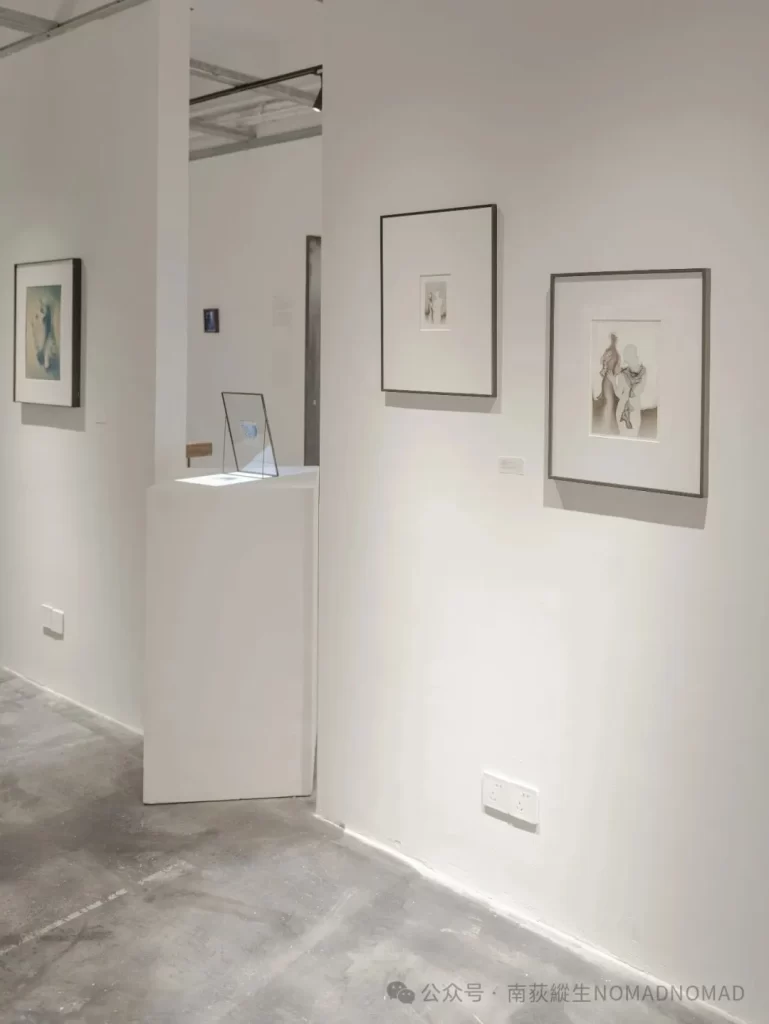
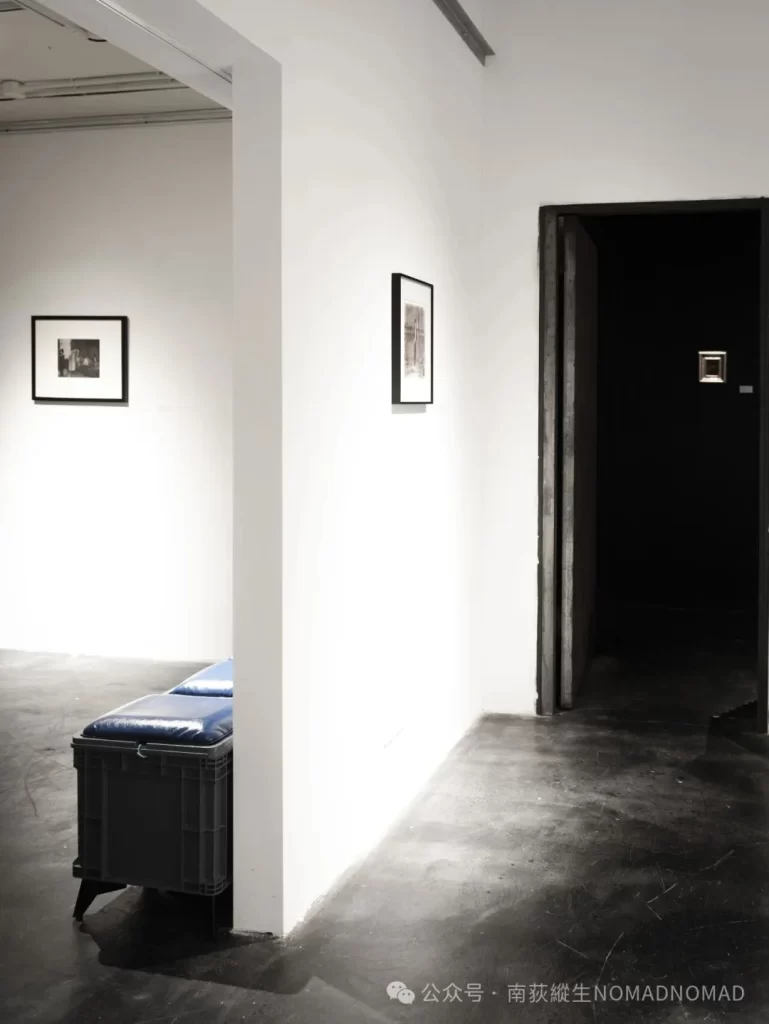
「方寸之外 · Intimate Size」 is nurtured by the HLiiC’s years of collecting, artist collaborations, technical research, and historical study. A sincere heart lies hidden between the lines of this text and within the faint glow of each handmade print on paper. Holding this exhibition in Shanghai feels like destiny; from conception to realisation, a series of serendipitous encounters made the entire endeavor feel fated. With the generous support of everyone involved, we present these small, not very distinct, unspectacular images. We invite you to step closer, to choose to view with the naked eye or with the aid of the optical lenses and lights we provide—to look, within a sphere of perceptive moderation, and with bated breath, at this gift, inscribed by light and accumulated through the oxidation of matter and time.
Imaging and Printing Processes Involved in the Exhibition Historical Alternative Processes
- 达盖尔银版 – Daguerreotype
- 盐纸印相 – Salt Paper Print (from a Paper Negative)
- 蓝晒印相 – Cyanotype
- 蛋白印相 – Albumen Print
- 湿版火棉胶 (铁板)- Tintype (Wet Plate Collodion)
- 碳素印相 – Carbon Print
- 树胶油印 – Gum Oil Print
- 铂/钯印相 – Platinum/Palladium Print
- 铂金印相 – Platinum Print
- 范戴克棕印相 -Vandyke Brown Print
- 明胶蚀刻 – Mordançage
- 三色酪蛋白印相 – Tricolor Casein Bichromate
- 金调色影像 – Orotone/Goldtone
- 宝丽来 – Polaroid
- 新金印工艺 – New Chrysotype Process
Contemporary Explorations in Classical Processes
- 流明印相 – Lumen Print
- 湿法蓝晒 – Wet Cyanotype
- 化学成像法+银盐 – Chemigram on Silver Gelatin Paper
- 蓝晒调色(红豆杉叶)- Toned Cyanotype (Japanese Yew Leaves)
- 蓝晒调色(黑草莓茶叶)- Toned Cyanotype (Black Strawberry Tea Leaves)
- 双色蓝晒 – Duotone Cyanotype
- 三色蓝晒(植物调色)- Tricolor Cyanotype (Botanical Toning)
- 蓝晒+钯金印相 – Cyanotype and Palladium Composite Print
- 三色树胶+蓝晒印相 – Tricolor Gum Bichromate with Cyanotype
- 宝丽来移膜 Polaroid emulsion lift
Composite Print Featured Works By
- 克里斯蒂娜·安德森 Christina Z. Anderson, USA
- 伊丽莎白·欧佩兰尼克 Elizabeth Opalenik, USA
- 艾丽·杨 Ellie Young, Australia
- 葛恒立 Ge Hengli,中国
- 冉俊 John Rash, USA
- 劳伦斯·切拉利 Laurence Chellali, France
- 梅丽莎·库特 Melissa Coote, Australia
- 山姆·王 Sam Wang, USA
- 周丹 Dan Zhou,China
HLiiC Collection Works By
- 安妮特·格拉兹 Annette Golaz, Switzerland
- 卡尔弗特·理查德·琼斯 Calvert Richard Jones (British, 1804-1877)
- 戴安娜·布洛姆菲尔德 Diana H. Bloomfield, USA
- 爱德华·谢里夫·柯蒂斯 Edward Curtis(USA, 1868 – 1952)
- 让-皮埃尔·苏德雷 Jean-Pierre Sudre (France, 1921-1997)
- 吉尔·韦汉姆 Jill Welham, UK
- 卡尔·柯尼希 Karl P. Koenig (USA, 1938-2012)
- 劳拉·吉尔平 Laura Gilpin (USA, 1891-1979)
- 莱恩·麦克菲 Leanne Mcphee, Australia
- 迈克·韦尔 Mike Ware, UK
- 荒木经惟 Nobuyoshi Araki, Japan
- 布拉迪普·马尔德 Pradip Malde, USA
- 索斯沃斯和霍斯银版⼯作室 Southworth & Hawes (USA, 1843-1863)
- 未知名艺术家 Unknown Artist
- 海报设计:杨镕嘉
- 英文校对:Charlotte